Week 4: MedTech + Art
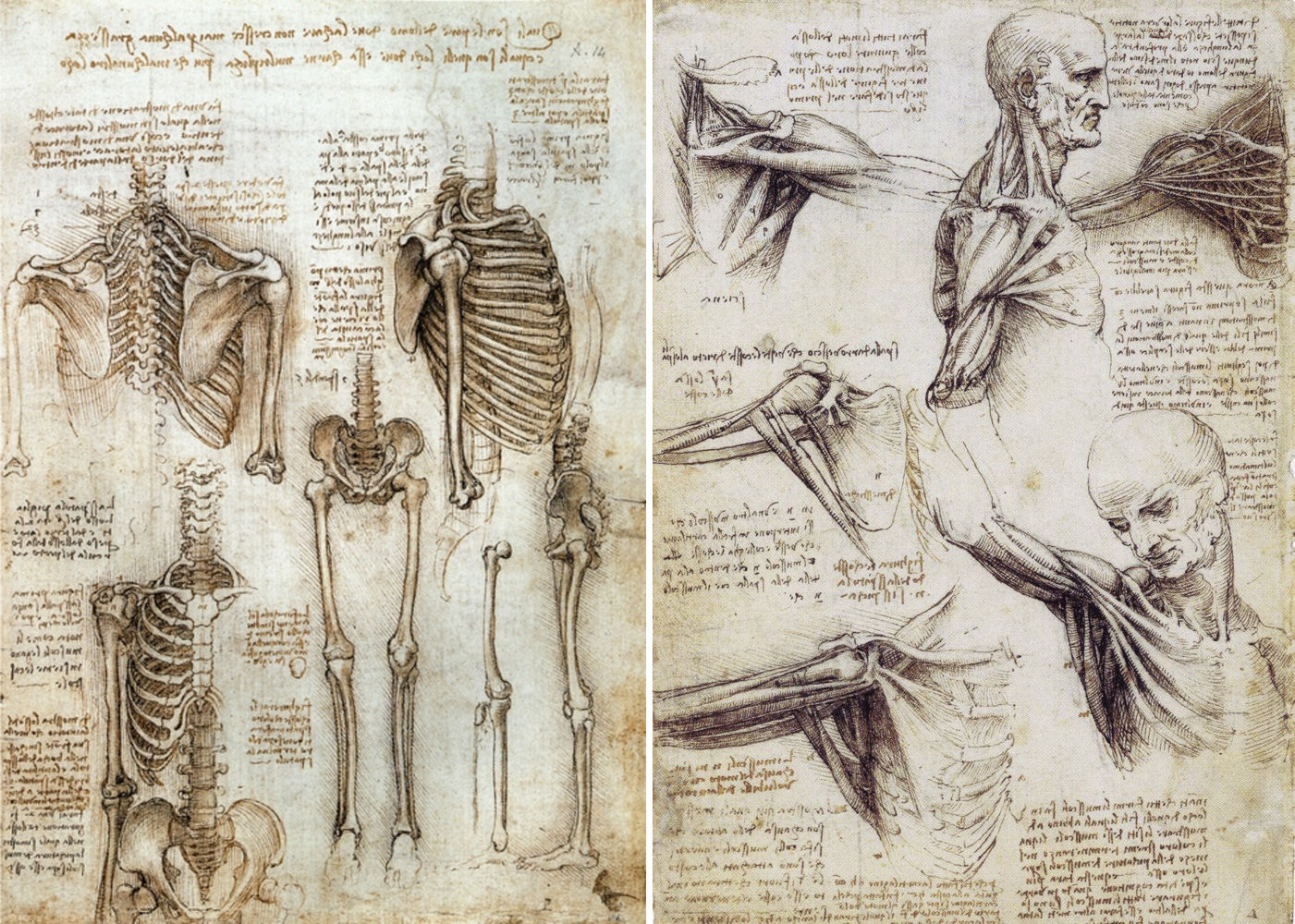 |
| Leonardo Da Vinci's Anatomical Sketches https://drawingacademy.com/wp-content/uploads/Leonardo-da-Vinci-the-Anatomical-Artist2.jpg |
The French artist Orlan, quoted below, utilizes modern advanced in plastic surgery to turn her body into a canvas (Vesna). From modeling her chin, cheeks, and forehead after famous Renaissance paintings, to giving her devil horns with implants usually meant for cheekbone enhancement, Orlan surpasses human boundaries and challenges the concept of what it means to be human. Additionally, artist Marilene Oliver utilizes MRI imagery to create works of art that make the viewer consider their own form and the delicate balance of the inner workings of the body (Oliver).
Everyone is scared of genetic DIY. It's crucial for artists to work with such technologies. It is important that we work between science and art (Jeffries).
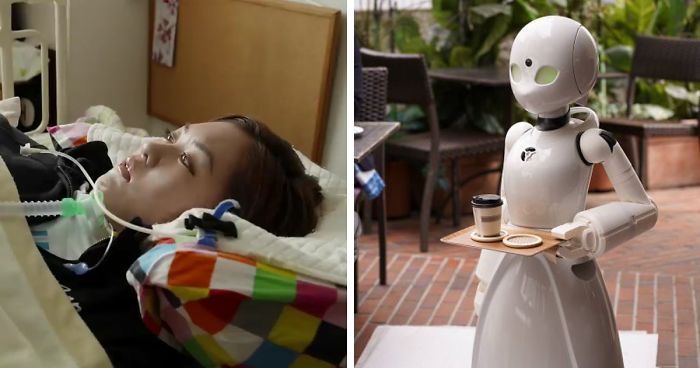 |
| Paralyzed Patients Control Cafe Servers https://static.boredpanda.com/blog/wp-content/uploads/2018/12/ disabled-people-robot-dawn-ver-beta-cafe-orby-lab-japan-fb10__700-png.jpg |
Similar to how dissection reshaped Renaissance art, a more and more detailed understanding of the human mind and body will permit art that provokes greater thinking on the human condition.
 |
| Forward Fold by Marilene Oliver https://i.cbc.ca/1.4391559.1510083724!/fileImage/httpImage/ image.jpg_gen/derivatives/original_780/marilene-oliver.jpg |
Sources
“Japanese Cafe Uses Robots Controlled by Paralysed People.” BBC News, BBC, 6 Dec. 2018, www.bbc.com/news/technology-46466531.
Jeffries, Stuart. “Orlan's Art of Sex and Surgery.” The Guardian, Guardian News and Media, 1 July 2009, www.theguardian.com/artanddesign/2009/jul/01/orlan-performance-artist-carnal-art.
Oliver, Marilène. Marilène Oliver Portfolio, DH Interactive Ltd, marileneoliver.com/about/artiststatement.
Sooke, Alastair. “Culture - Leonardo Da Vinci's Groundbreaking Anatomical Sketches.” BBC, BBC, 21 Oct. 2014, www.bbc.com/culture/story/20130828-leonardo-da-vinci-the-anatomist.
Vesna, Victoria. “http://www.youtube.com/v/FIX-9mXd3Y4.” Lecture. Medicine pt3. Youtube, 22 Apr. 2012. Web. 28 Apr. 2019. <http://www.youtube.com/watch?v=FIX-9mXd3Y4>.


Comments
Post a Comment